Democracy needs us. All of us. It also needs the many artists, the various cultural institutions – art itself in all its forms. Not all artists believe that art can save the world. But that does not necessarily mean it isn’t true.
Given the seriousness of the situation, many artists are engaging with democracy and developing different strategies and formats for connecting themselves and their audiences to social reality. The most extensive project in this context is taking shape this year in collaboration with the University of Zurich: «Die Allianz der letzten Demokratien». Eighty years ago, Winston Churchill concluded his legendary appeal for a democratic continent in the university auditorium with the call: «Let Europe arise!». Today, Europe must ask itself how this era of democratic states can be sustained into the future – and Switzerland must ask itself whether it wants to be part of it (and is in fact doing so as this programme goes to print). Together with researchers from the University of Zurich, the group Proberaum Zukunft has developed a simulation. In the pre-enactment of the founding of the fictional «Die Allianz der letzten Demokratien», real international and local politicians form a political assembly together with the audience in the university auditorium and must make a very real decision: do we want to help ensure that the idea of a democratic society survives in the 21st century?
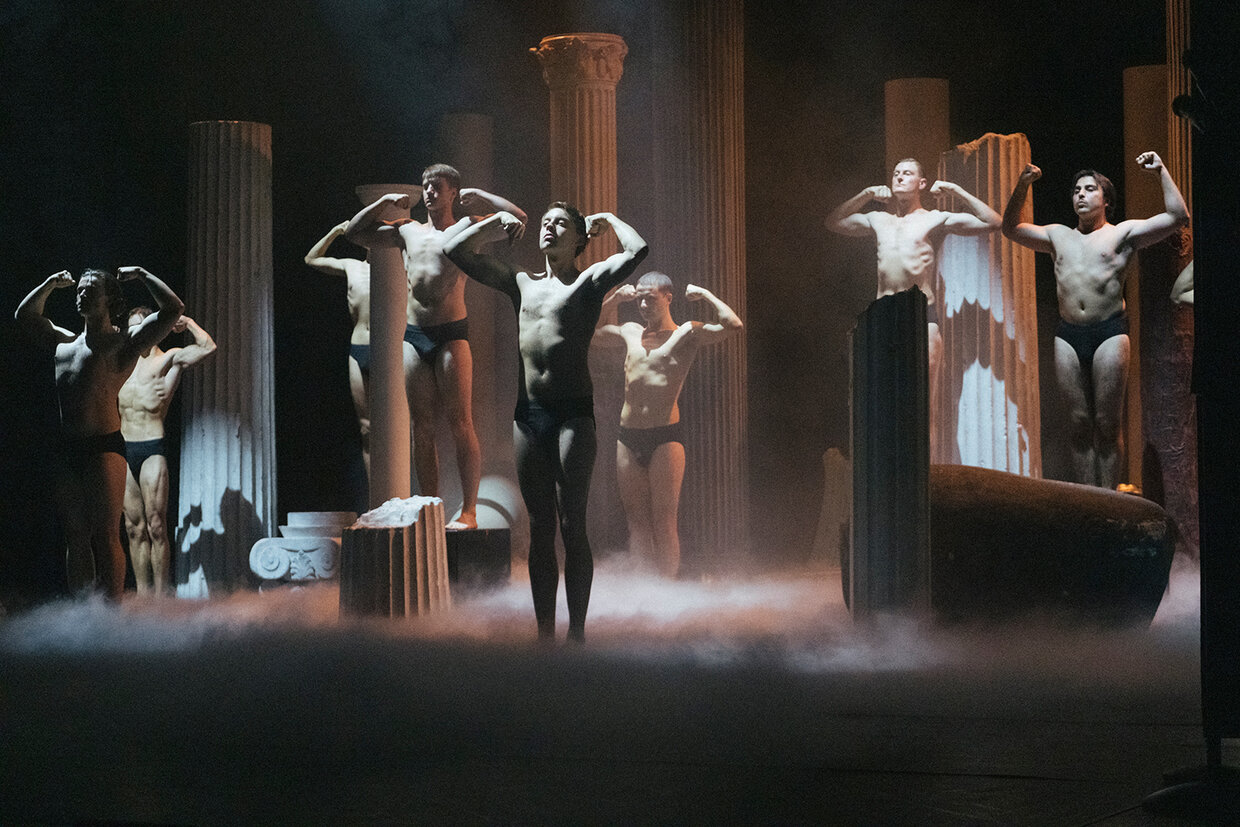
For years now, we have written about the rise of anti-democratic and autocratic forces, even in countries close to home. You have likely noticed this as well. What may be less obvious, however, is the extent to which right-wing and inhumane rhetoric has become normalised. «Violenza 2025» makes almost physically palpable how closely conservative and fascist thinking can align – and how difficult it is when confronted with it so directly. American philosopher Jason Stanley has long explored these questions. In his «Talking on Water» lecture, he describes the characteristics of fascism in today’s political landscape and argues for naming things for what they are, rather than trivialising them under the vague category of populism. He has recently left Yale University because he no longer feels able to continue his work in the United States. A second lecture, by the Basel sociologists Carolin Amlinger and Oliver Nachtwey, complements Stanley’s perspective on the US and the wider world with an analysis of the rise of the right in German-speaking countries.
Unfortunately, not only verbal violence has become normalised. Alongside the wars already unfolding not far from home, another has emerged – perhaps geographically more distant, yet deeply present in its effects. Several participants in this year’s festival have been living for years, even decades, with the direct consequences of violent conflicts, whether in the Baltic states, Colombia, Palestine or Lebanon. They experience these realities as theatre-makers, aid workers, artists, family members and researchers, and speak about how violence enters into their everyday lives and how they try to find ways of dealing with it. Their per sonal and artistic strategies move between despair and hope – from turning to Ancient Rome to imagining escape into outer space.
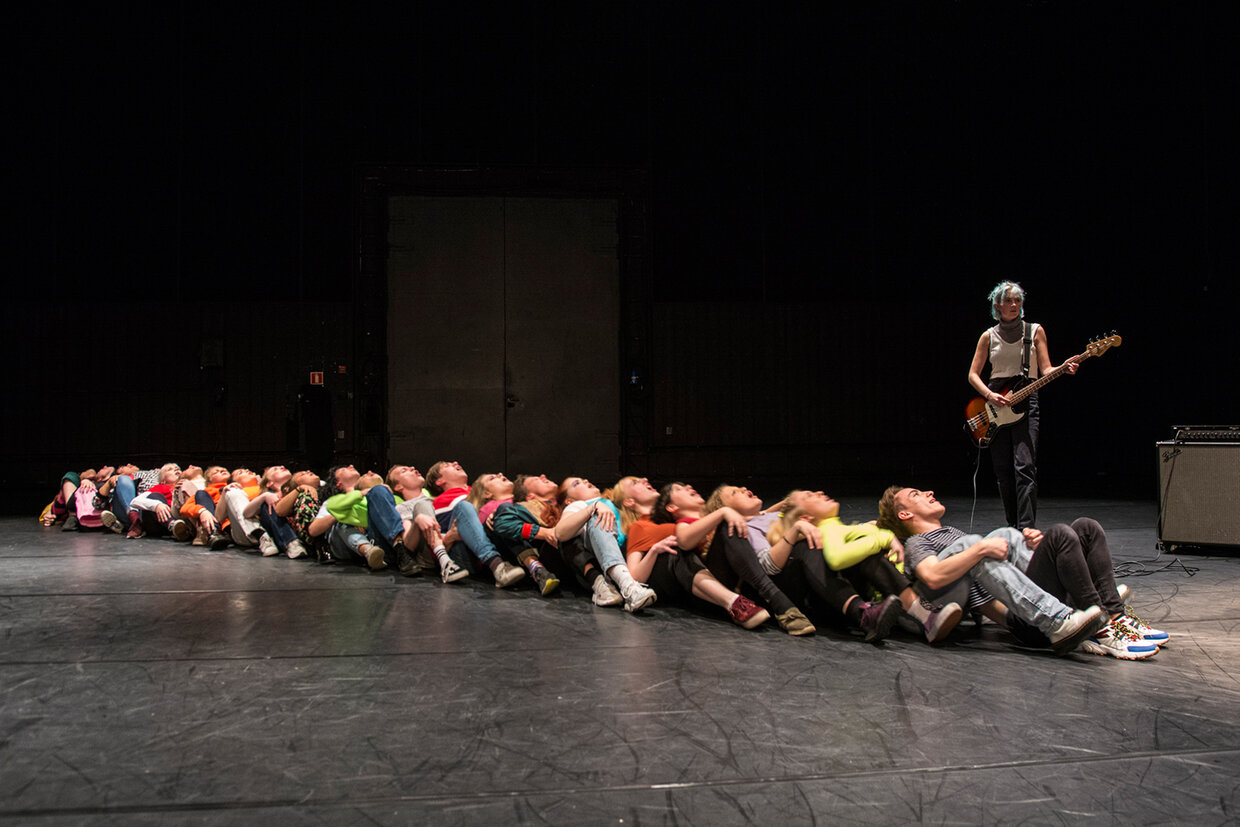
Imagining different futures is an important driving force for transformation. Imagination is one of art’s superpowers; art can spark empathy and discussion just as much as it can shape and question identity. In his essay written for this year’s programme, the Belgian cultural sociologist Pascal Gielen describes the concrete potential of people coming together in theatre to create social connectedness.
Every year, the Zürcher Theater Spektakel creates unlikely encounters between widely differing perspectives from around the world. Several projects in this year’s festival bring together different groups of people in very real ways: the Uruguayan choreographer Tamara Cubas gathers more than 80 people from Zurich on stage in «Multitud», while the Bulgarian musician and theatre-maker Ivo Dimchev gets his audience dancing – and offers a little queerness for everyone. Finally, twenty teenagers from Iceland and Zurich share their «Teenage Songbook of Love and Sex» – and almost in passing remind us how rarely the voices of this generation are truly heard.
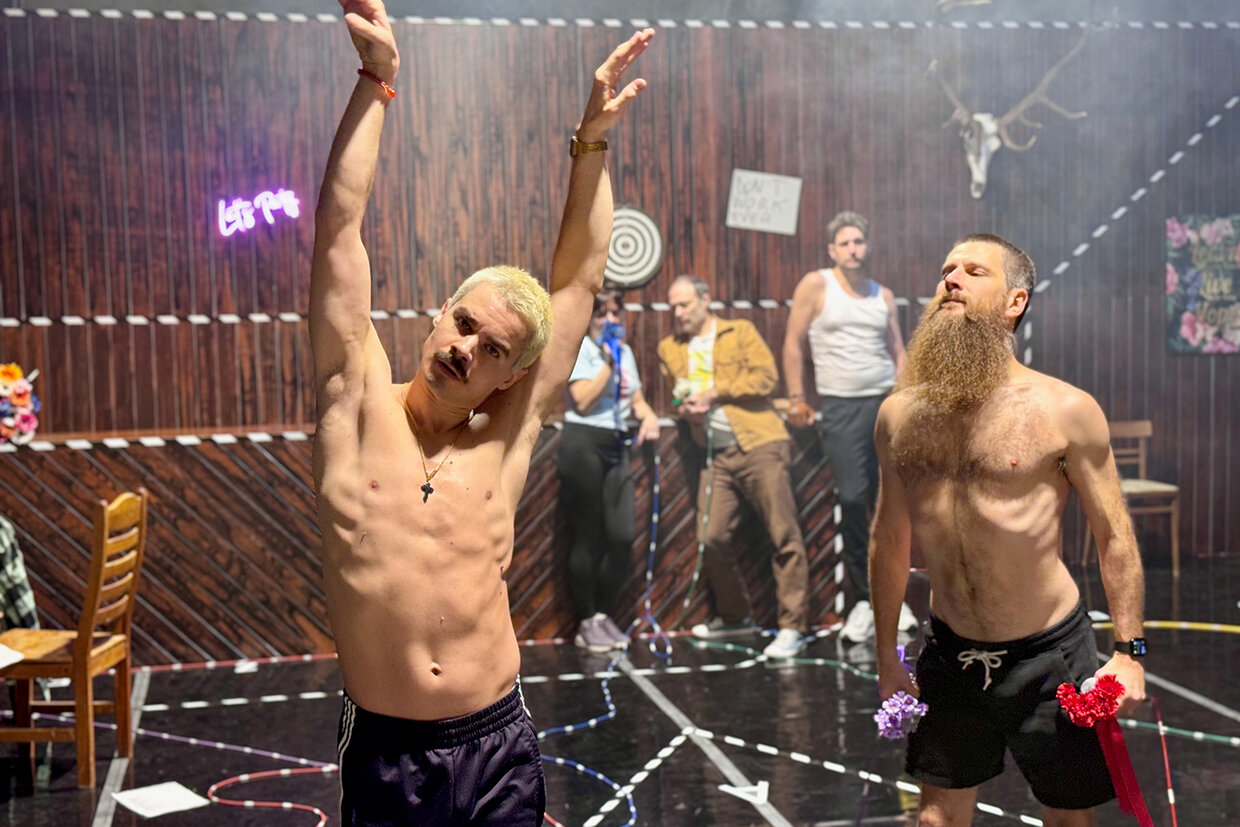
The meeting of very different people and artistic perspectives on the Landiwiese always carries a utopian moment. But what would the Theater Spektakel be without the meaning of life? The Nature Theater of Oklahoma search for it in their characteristically humorous way – singing and dancing in a setting somewhere between a gym hall and a basement party. A shared fascination with the chansonnier Jacques Brel brings together the legendary choreographer Anne Teresa de Keersmaeker/Rosas and the young dancer Solal Mariotte on the Seebühne. The Czech company Cirk La Putyka moves virtuously between sport, movement and art; the young Swiss artist Julian Vogel brings rollerblades and magic to his «Ceramic Circus», while FUNDUS THEATER invites children to share big feelings. A remarkable artist comes to Zurich for the first time: French acrobat and performer Vimala Pons presents her large-scale piece «Honda Romance». For years, she has consistently explored questions of balance, whether physical or emotional – this time in a furious, radically contemporary piece for ten performers.
With this year’s programme, we hope once again to have found a balance between emotional resonance and irritation, between reflection and entertainment – even if a few other things may have fallen out of balance. Democracy needs all of us. We may already have mentioned that. All the more reason to spend inspiring evenings at the Zürcher Theater Spektakel. Until then.
The festival direction
Matthias von Hartz, Sarah Wendle, Veit Kälin